
Beyond Rising Costs: How Cost Disorder Is Reshaping the Global Automotive Supply Chain
The manufacturing industry has spent years preparing for rising costs.
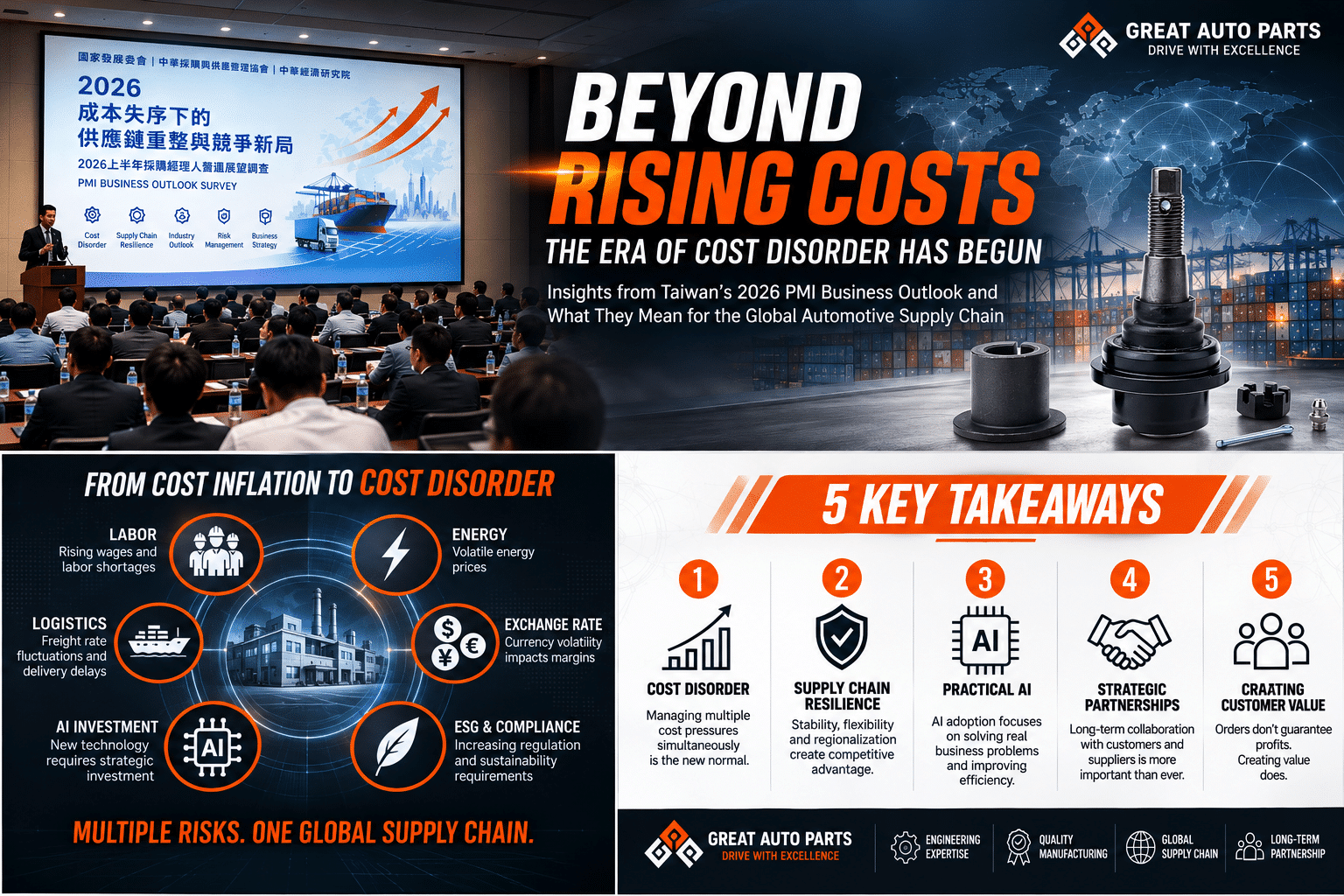
However, Taiwan’s 2026 First-Half PMI (Purchasing Managers’ Index) Business Outlook Survey suggests that manufacturers are entering an entirely different phase. The real challenge is no longer simply inflation. It is cost disorder.
Instead of one or two predictable cost increases, manufacturers are now facing multiple pressures at the same time—including labor shortages, raw material volatility, energy prices, logistics disruptions, exchange-rate fluctuations, ESG investments, AI implementation, and geopolitical uncertainty.
For automotive OEM and aftermarket suppliers, this represents more than a short-term challenge. It is changing the rules of global competition.
From Cost Inflation to Cost Disorder
Traditionally, manufacturers focused on reducing production costs and improving operational efficiency. Today’s environment is fundamentally different. Operating costs are increasing from every direction:
- Raw materials
- Labor
- Transportation
- Energy
- Exchange rates
- ESG compliance
- AI investment
- Supply chain diversification
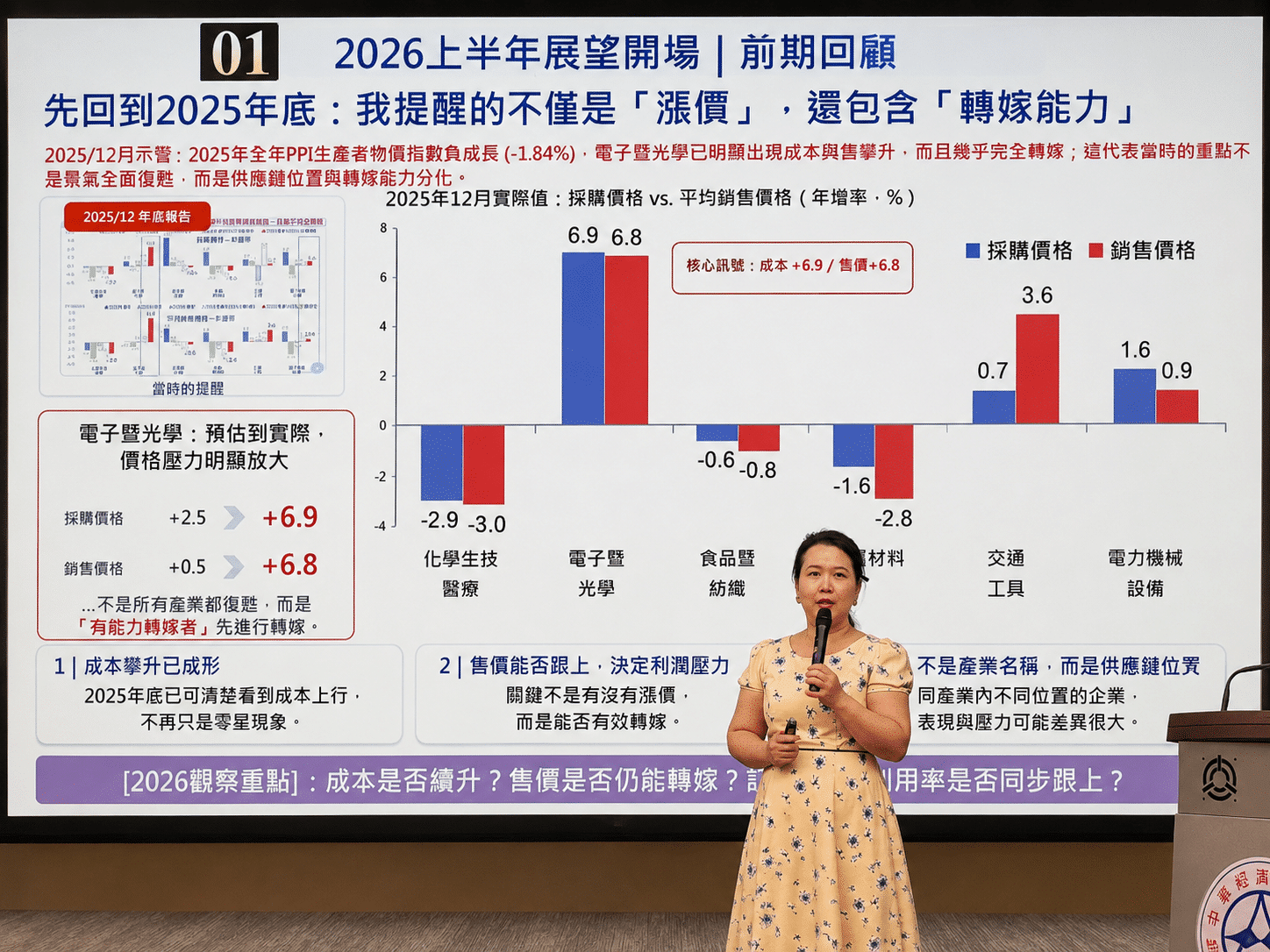
The PMI survey shows that although nearly 70% of manufacturers reported higher procurement costs, only about half were able to pass those increases on to customers. Many companies are absorbing higher costs while facing growing uncertainty.
As a result, having more orders no longer guarantees higher profits.
Supply Chain Resilience Has Become a Competitive Advantage
One of the strongest messages from the survey is that manufacturers are no longer expanding production simply to increase capacity. Instead, companies are investing to build more resilient supply chains.
Key strategies include:
- Diversifying suppliers
- Expanding regional manufacturing
- Building strategic partnerships
- Increasing inventory flexibility
- Improving demand forecasting with AI
- Strengthening engineering collaboration with customers
Rather than pursuing the lowest manufacturing cost, successful companies are prioritizing stability, responsiveness, and long-term partnerships. In today’s market, resilience has become a competitive advantage.
AI Is Changing the Way Manufacturers Work
Artificial intelligence was another major topic throughout the survey. Nearly 70% of companies have already introduced AI into their operations. However, most implementations are focused on practical applications such as:
- Production planning
- Sales forecasting
- Workflow optimization
- Customer service
- Internal knowledge management
Only a relatively small percentage of manufacturers have achieved fully integrated smart factories. The lesson is clear:
AI creates value when it solves real business problems—not simply because it is new technology.
Geopolitical Risk Is Becoming the New Normal
Global manufacturers are also adapting to increasing geopolitical uncertainty. Instead of relying on a single production base or supply source, many companies are redesigning their supply chains around flexibility and risk management.
This includes:
- Regional production strategies
- Dual sourcing
- Strategic inventory
- Local partnerships
- Engineering collaboration
These changes are particularly important for industries requiring high product reliability and consistent delivery, including automotive suspension and steering components.
What This Means for Automotive Manufacturers
For companies serving the automotive industry, the competitive landscape is shifting rapidly. Customers today evaluate suppliers based on far more than price. They increasingly expect:
- Stable supply chains
- Engineering support
- Product customization
- Reliable quality
- Fast response times
- Long-term manufacturing partnerships
The ability to consistently deliver value has become just as important as manufacturing capability itself.
Great Auto Parts’ Perspective
At Great Auto Parts, these market trends reinforce the direction we have been pursuing for years. As a Taiwan-based manufacturer specializing in suspension and steering components for global OEM and aftermarket customers, we continue investing in:
- Engineering-driven OEM & ODM development
- Stable manufacturing capacity
- Flexible production planning
- Advanced quality management
- Reliable global supply chain partnerships
We believe our role extends beyond manufacturing high-quality automotive parts. Our goal is to become a trusted engineering and supply chain partner that helps customers navigate an increasingly uncertain global market.
Looking Ahead
The future of manufacturing will not be determined solely by who can produce at the lowest cost. Instead, success will belong to companies capable of combining:
- Engineering innovation
- Supply chain resilience
- Strategic partnerships
- Operational flexibility
- Long-term customer value
The era of cost disorder has already begun. Manufacturers that adapt early will be best positioned to create sustainable growth in the years ahead. Having orders does not guarantee profits. Creating value does.