

Greasable Ball Joint Manufacturer: Off-Road Sourcing Checklist
Quick Answer: Greasable vs. Sealed Ball Joints for Off-Road Use
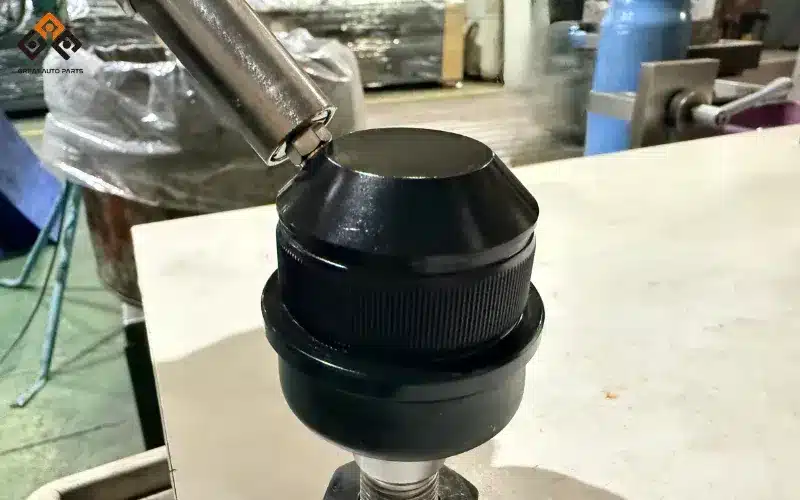
Greasable vs. Sealed Ball Joints
| Factor | Greasable Ball Joint | Sealed Ball Joint |
|---|---|---|
| Maintenance | Requires periodic grease service | No service required, but no service possible either |
| Contamination resistance over time | Can be replenished with fresh grease via the grease fitting | Degraded grease cannot be replaced |
| Typical service life under heavy use | Can be extended through proper maintenance | Fixed to the life of the factory-packed grease |
| Best suited for | Off-road, lifted trucks, heavy-duty use | Standard on-road passenger applications |
Why Off-Road and Lifted Truck Applications Favor Greasable Joints
Off-road driving and lifted suspension geometries subject ball joints to more frequent and more extreme articulation angles than standard on-road suspension travel, along with greater exposure to water, mud, and abrasive contaminants that can degrade grease and accelerate wear. Because these conditions place unusually heavy demand on the joint’s internal lubrication, the ability to periodically replenish grease through the grease fitting gives greasable joints a meaningful practical advantage over sealed designs in exactly the applications where suspension components see the hardest use.
Key Components of a Greasable Ball Joint
- Ball stud, typically forged and heat-treated for strength under load, with machined grease grooves that help channel lubricant across the bearing surface
- Housing, machined to hold the ball stud and internal bearing surface
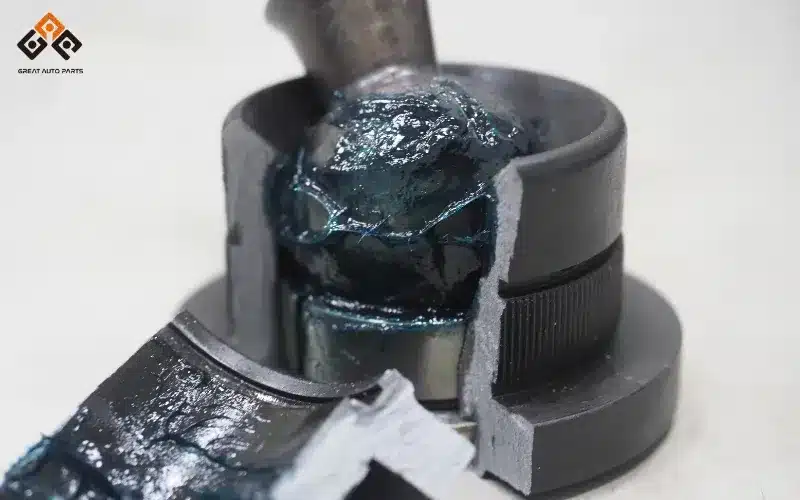
- Metal-to-metal bearing interface, the load-bearing contact surface between the ball stud and housing that is lubricated through the grease fitting
- Grease fitting (zerk fitting), allowing a grease gun to inject lubricant into the joint
- Boot or seal, protecting the internal bearing surface from contamination while allowing grease to be replenished
Material and Construction Considerations: Ball Stud, Bearing, Housing, and Boot Design
Ball Stud Material and Heat Treatment
The ball stud experiences the highest concentrated stress within the joint, and its material grade and heat treatment process directly affect fatigue resistance under repeated heavy loading. Buyers evaluating a greasable ball joint manufacturer should ask specifically about ball stud material specification and heat treatment process, rather than accepting a general strength claim without supporting detail. The ball stud also incorporates machined grease grooves that channel lubricant evenly across the bearing surface during service, and buyers should confirm this groove design is precision-machined into the stud rather than a coarse or secondary feature.
Housing Machining Tolerance
Precise machining tolerance in the housing affects how well the ball stud is retained and how smoothly the joint articulates under load, with looser tolerances potentially contributing to premature wear or looseness developing over the joint’s service life.
Boot Material and Design
The protective boot must withstand exposure to mud, water, road debris, and high operating temperatures near the suspension and drivetrain while still allowing grease to properly seat during service, making boot material selection and design a meaningful factor in overall joint durability.
Metal-to-Metal Bearing Design
Most greasable ball joints use a metal-to-metal bearing surface between the ball stud and housing, rather than the nylon or polymer bushings common in sealed, non-serviceable designs. This interface generally supports higher load capacity, which is a meaningful advantage under the heavier static and shock loading seen in off-road and lifted truck use. Because metal-to-metal contact depends on a consistent lubricant film to prevent direct wear between the two surfaces, the grease fitting and a disciplined service interval are just as important to joint life as the bearing design itself.
Real-World Load Case Examples in Off-Road Use
Understanding the specific loading scenarios a ball joint faces in off-road use helps clarify why standard on-road testing standards alone may not fully capture the demands of the application. Rock crawling, high-speed desert running, and towing over rough terrain each place meaningfully different stress patterns on suspension ball joints, and a joint optimized for one scenario may not be the ideal choice for another.
- Rock crawling involves slow, extreme articulation angles with high static loading at full droop or compression
- High-speed desert running involves rapid, repeated cyclical loading at more moderate articulation angles
- Towing over rough terrain combines sustained heavy static load with intermittent shock loading from terrain irregularities
Grease Fitting Placement and Accessibility
Grease fitting placement affects how practical routine maintenance actually is once the joint is installed on a vehicle, since a fitting positioned in a hard-to-reach location discourages regular servicing even on an otherwise well-designed greasable joint. Manufacturers with genuine experience in off-road and lifted truck applications typically design fitting placement with real-world accessibility in mind, informed by actual installation and service experience rather than purely theoretical design.
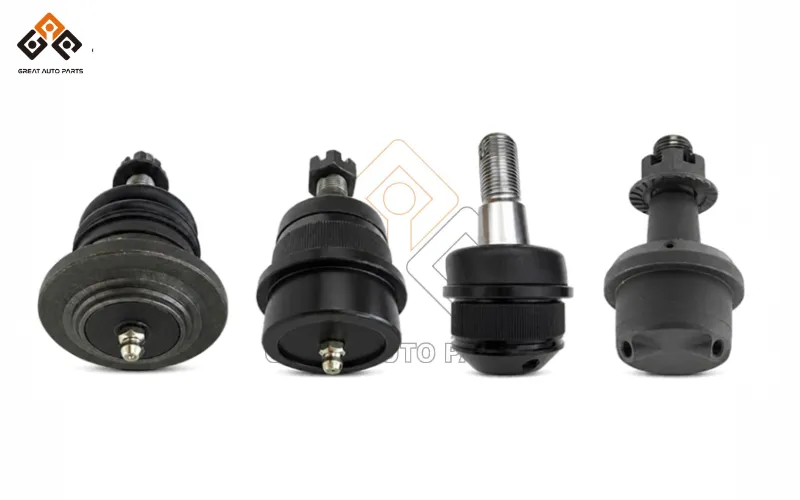
Ball Joint Angle and Travel Considerations for Lifted Applications
Lifted trucks and off-road vehicles often require ball joints capable of a wider range of articulation angle than the factory joint was originally designed for, since increased suspension travel and altered geometry from a lift kit can push the joint closer to its mechanical limits during full articulation. Buyers should confirm the specific angle and travel rating of a replacement or upgrade joint against their actual lift height and suspension geometry, rather than assuming a joint marketed generically for “lifted applications” automatically matches their specific setup and travel requirements.
- Confirm the joint’s rated articulation angle against your specific lift height and suspension geometry
- Discuss compatibility with your specific control arm or knuckle design before ordering
Preload and Fit Considerations
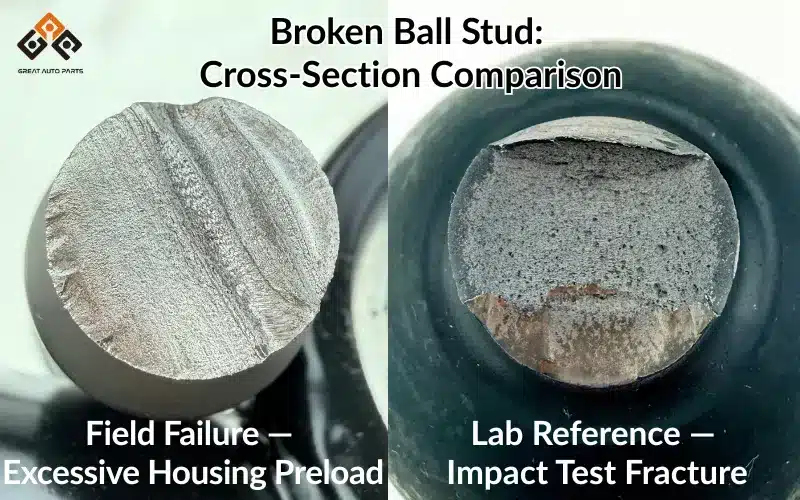
A ball joint that fits too loosely in its housing can develop premature play and noise, while one that fits too tightly can bind during articulation and accelerate wear at the contact surfaces. Manufacturing precision in both the ball stud and housing dimensions directly determines whether a joint achieves the correct preload fit, which is difficult to verify from a product listing alone and often requires either direct supplier documentation or hands-on evaluation of sample parts.
An Engineer’s Perspective on Greasable Ball Joint Durability
Mike, a design engineer with 13 years of experience in automotive suspension and steering components at Great Auto Parts, notes that the most common failure point he sees in the field traces back to dimensional fit between the ball stud and housing, not material grade alone. “When a customer reports a ball stud snapping under normal off-road use, the root cause is usually a housing tolerance that was machined too tight,” he says. “If the fit is too snug, the ball stud has no buffer space to move as the joint articulates, so instead of the joint absorbing shock through normal movement, that stress concentrates directly on the stud itself until it fractures. Housing tolerance and ball stud toughness have to be engineered together — you can spec the toughest steel available, but if the housing doesn’t give it room to move, you’ve built in the failure.” His observation is a reminder that buyers evaluating a manufacturer should scrutinize dimensional consistency between the ball stud and housing with the same rigor applied to material and heat treatment specifications.
Evaluating a Greasable Ball Joint Manufacturer
- Request documented material specifications and heat treatment process for the ball stud
- Confirm the manufacturer has appropriate in-house inspection equipment, such as ball stud impact testing and pull-out force testing
- Discuss grease fitting placement and real-world service accessibility for the specific application
- Review quality control processes for dimensional consistency across production batches
Corrosion Protection and Coating Options
Ball joint housings exposed to road salt, mud, and moisture over extended off-road or winter driving benefit from corrosion-resistant coatings applied during manufacturing, since surface corrosion on the housing can eventually affect boot seating and grease fitting function even if the internal bearing surface itself remains undamaged. Buyers in regions with heavy road salt exposure or frequent water crossing use should specifically ask about coating options and their expected performance in these conditions.
- Zinc plating offers a cost-effective baseline level of corrosion protection for general use
- Additional coating options, such as phosphate or specialized corrosion-resistant finishes, may be available for extreme exposure conditions
- Confirm coating durability expectations align with your actual operating environment rather than a generic marketing claim, and ask whether the manufacturer validates coating performance using in-house salt spray testing equipment
Maintenance Practices That Maximize Greasable Joint Life
- Establish a regular grease interval based on actual use intensity, not just a generic mileage-based schedule
- Inspect boots regularly for tears or damage that could allow contamination to bypass the grease fitting’s benefit
- Increase grease frequency following extended off-road use in muddy, wet, or highly abrasive conditions
OEM Replacement vs. Performance Upgrade Joints
OEM Replacement Joints
Direct OEM-spec replacement joints are designed to restore original vehicle performance and are generally the appropriate choice for vehicles that have not been lifted or modified beyond factory specification, where matching original geometry and load rating is the priority.
Performance Upgrade Joints
Upgraded joints designed specifically for lifted or heavily modified vehicles typically offer increased articulation angle range, upgraded ball stud material, or reinforced housing construction compared to OEM-spec parts, reflecting the different loading and geometry demands of a modified suspension setup.
Working With a Manufacturer on Custom or OEM Programs
Distributors and vehicle brands sourcing greasable ball joints at volume for a private-label or OEM supply program should discuss specification development, testing validation, and packaging requirements directly with the manufacturer early in the relationship, rather than treating the sourcing decision as a simple catalog part number selection.
- Share detailed application requirements, including vehicle platforms and expected use conditions
- Request sample units for independent load and articulation testing before committing to volume
- Discuss packaging and labeling requirements for your specific distribution channel
- Establish a quality agreement covering defect rates and replacement policy for production orders
Common Mistakes When Sourcing Greasable Ball Joints
- Selecting based on price alone without verifying ball stud material and heat treatment specifications
- Overlooking boot design quality, which can undermine the durability benefit of a greasable design if contamination bypasses it
- Failing to establish a realistic maintenance schedule matched to actual use intensity after installation
- Assuming all greasable joints perform equivalently regardless of manufacturing quality differences
Testing Standards and Validation Data
Reputable ball joint manufacturers typically validate their products against defined pull-out force, impact resistance, and corrosion protection standards before releasing them to production, and buyers evaluating a new manufacturer should ask specifically what testing has been performed and whether results are available for review. Cycle testing, which simulates repeated articulation over a joint’s expected service life, is another method used across the industry to assess long-term wear characteristics, and depending on a manufacturer’s equipment investment, it may be performed in-house or through a qualified third-party test lab. In-house testing capability matters because it lets a manufacturer verify performance directly on its own production parts rather than relying solely on third-party or supplier-reported data.
- Ask whether pull-out force testing has been performed and what the results were for the specific joint design
- Ask whether coating and corrosion resistance have been verified through salt spray testing
- Ask whether ball stud impact testing has been performed to verify strength under shock loading
- Confirm that the performance of sample parts is consistent with mass-produced parts
- Ask whether cycle testing has been performed, whether in-house or through a third-party lab, and request the data if it is available
Frequently Asked Questions About Sourcing Greasable Ball Joints
Q: Why are greasable ball joints preferred for off-road and lifted truck use?
A: They allow fresh grease to be periodically replenished through the grease fitting, which matters most under heavy articulation and contamination exposure.
Q: What should I check about ball stud construction when sourcing?
A: Ask for documented material specification and heat treatment process, since this directly affects fatigue resistance under load.
Q: Does grease fitting placement actually matter?
A: Yes — a hard-to-reach fitting discourages regular servicing even on an otherwise well-designed greasable joint.
Q: How often should a greasable ball joint be serviced?
A: Frequency should be based on actual use intensity, with more frequent service after extended off-road or contaminated conditions.
Q: Can a damaged boot undermine a greasable joint’s advantage?
A: Yes — a torn or damaged boot can allow contamination to bypass the benefit of periodic grease servicing.
Q: What quality documentation should I request from a manufacturer?
A: Request material specifications, heat treatment details, and pull-out force or ball stud impact testing data for the specific joint design.
Q: Do lifted trucks need different ball joints than a stock vehicle?
A: Often yes — increased suspension travel and altered geometry can require a joint with a wider articulation angle rating than the factory part.
Q: What in-house testing should a greasable ball joint manufacturer be able to perform?
A: Look for a manufacturer with in-house pull-out force testing, ball stud impact testing, and salt spray corrosion testing, which allows performance to be verified directly on production parts rather than relying only on supplier claims.
Q: Does housing corrosion actually affect joint performance?
A: It can — corrosion on the housing may eventually affect boot seating and grease fitting function even if the bearing surface itself is unaffected.
Conclusion: What to Verify Before Choosing a Greasable Ball Joint Manufacturer
Choosing a greasable ball joint manufacturer for off-road or lifted truck applications comes down to evaluating material quality, construction precision, and practical serviceability together, rather than assuming all greasable designs deliver the same durability benefit. Buyers who verify ball stud specification, boot design, and grease fitting accessibility upfront position themselves for meaningfully longer component life in exactly the demanding conditions where suspension parts face the hardest use, whether sourcing individual replacement units or establishing a larger private-label supply program.
As off-road and lifted truck applications continue to demand suspension components that can withstand repeated heavy articulation and contamination exposure, well-engineered greasable ball joints paired with disciplined maintenance practices remain one of the most cost-effective ways to extend suspension system service life and reduce unplanned downtime, whether for individual vehicle owners or fleet operators managing a large number of heavily used vehicles.
Buyers who approach ball joint sourcing with the same diligence applied to other critical safety components ultimately reduce both maintenance costs and the risk of premature suspension failure over the life of the vehicle.