

Lower Control Arm or Upper? When to Replace Upper or Lower Control Arms
Knowing when to replace upper or lower control arms is vital for road safety. Drivers often hear clunking noises over speed bumps. Your steering wheel may also feel loose or shaky. These are clear warning signs from your suspension system. Control arms link your road wheels directly to the chassis, keeping your ride smooth and your tires properly aligned.
When suspension parts wear out, you face a critical repair choice: should you replace the upper arm, the lower arm, or both? Understanding these unique wear patterns keeps your car safe and stable, and it also saves you money on long-term vehicle maintenance.
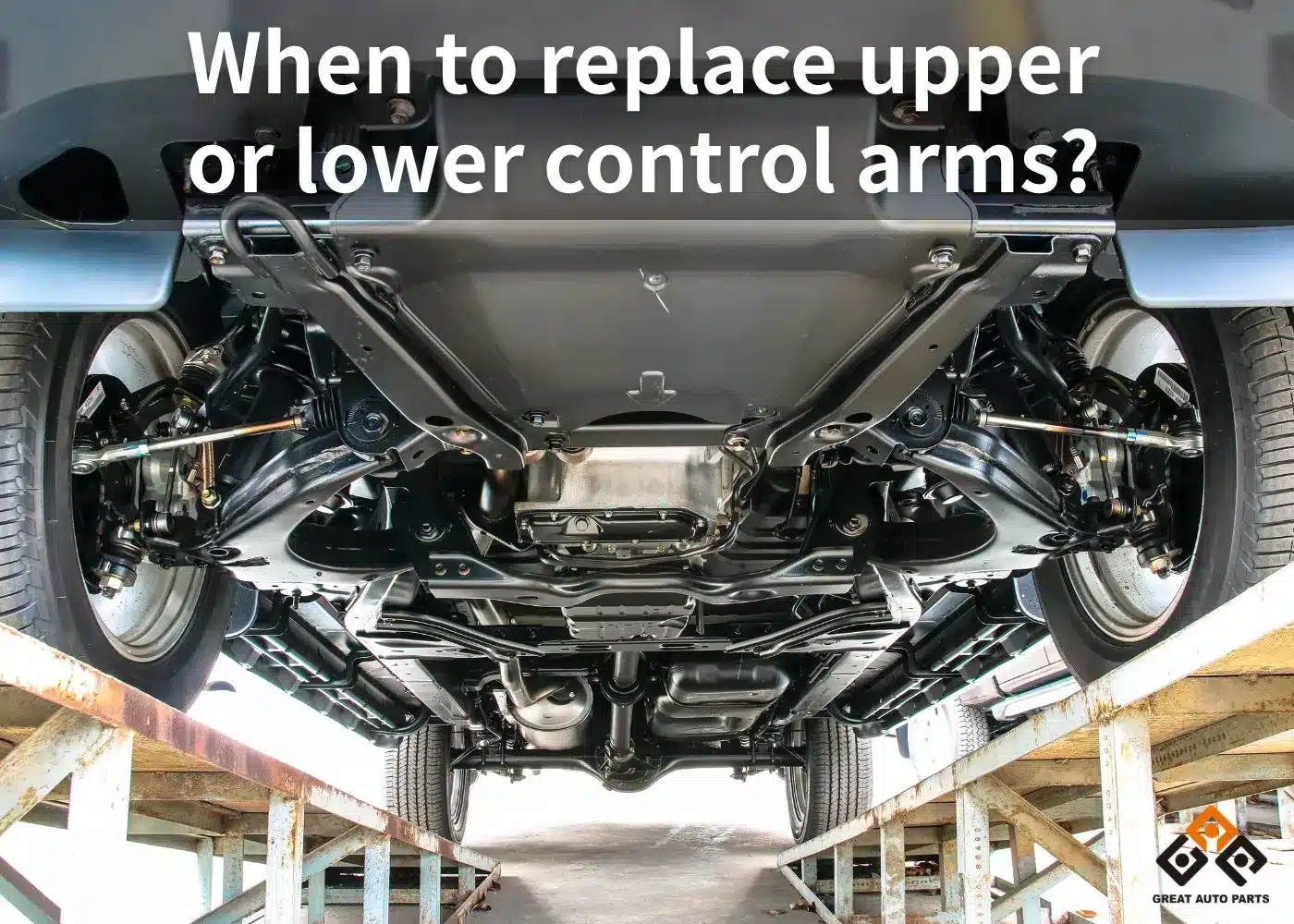
Anatomy of Car Suspension: Understanding Upper vs. Lower Control Arms
Control arms serve as the main pivot points for your wheels. They allow smooth vertical wheel movement while keeping your tires tracking straight, in line with proper suspension geometry.
- Upper Control Arm (UCA): The UCA guides the vertical path of the wheel hub assembly and maintains the proper camber angle during sharp turns.
- Lower Control Arm (LCA): The LCA is larger and structurally stronger. It carries the vehicle’s static weight and handles braking forces.
How Control Arms, Bushings, and Ball Joints Absorb Road Vibrations
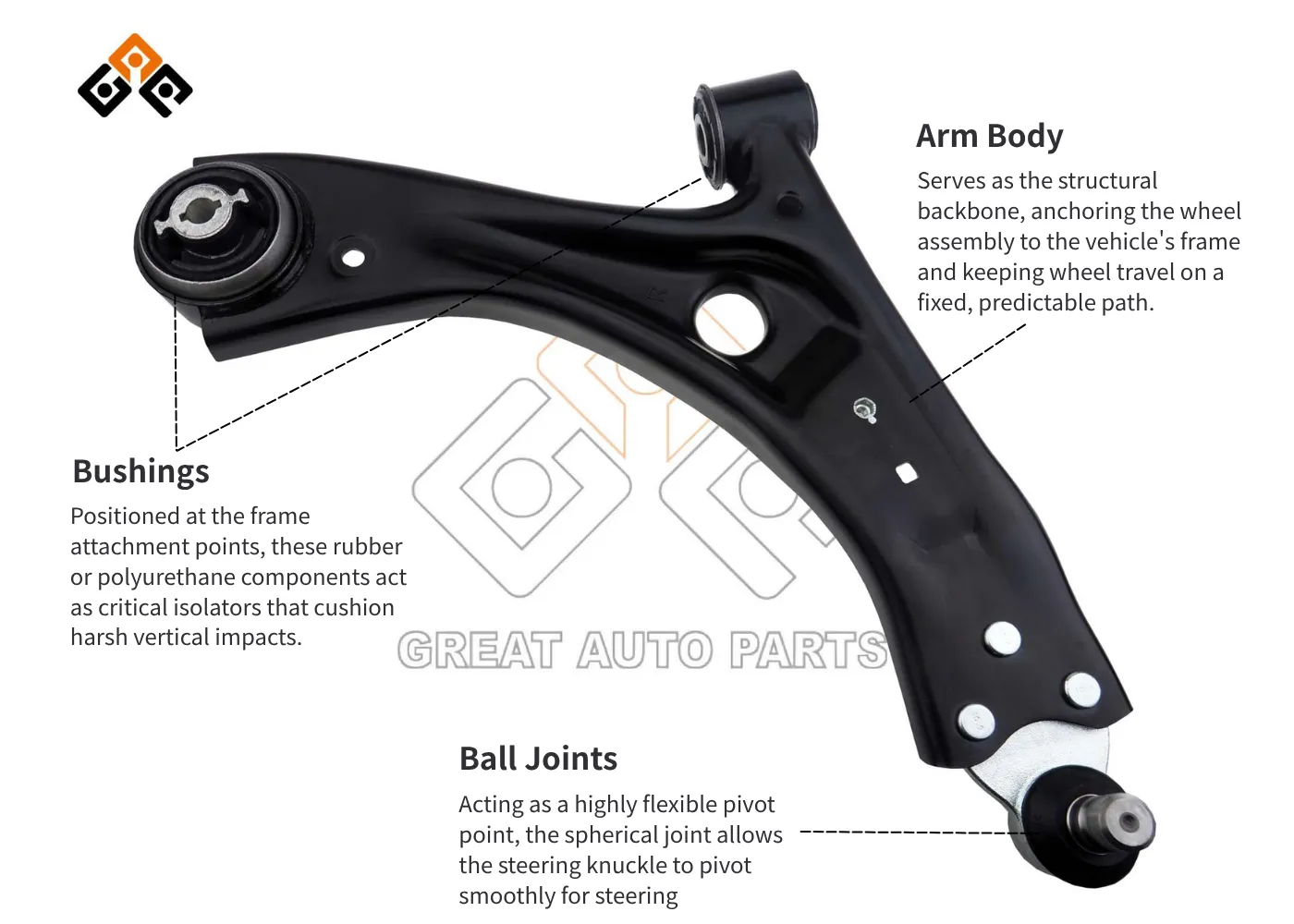
The main structure of a control arm consists of the metal arm body and two critical wear-and-tear components. Together, they function as your chassis’ primary defense system:
- Metal Arm Body: Serves as the structural backbone, anchoring the wheel assembly to the vehicle’s frame and keeping wheel travel on a fixed, predictable path.
- Suspension Bushings: Positioned at the frame attachment points, these rubber or polyurethane components act as critical isolators that cushion harsh vertical impacts and absorb high-frequency road vibrations before they can transfer into the passenger cabin.
- Chassis Ball Joints: Acting as a highly flexible pivot point, the spherical joint allows the steering knuckle to pivot smoothly for steering while simultaneously dampening multi-directional road shocks.
How Control Arms Interact With Suspension Systems to Ensure Safety
Control arms do not work alone; they function inside a complex suspension network. Understanding how these chassis parts work together highlights why a worn arm threatens driving safety.
Control arms hold the wheel hub while connecting to the springs and shock absorbers. The springs support the vehicle’s weight, while the shocks dampen spring bounce. The control arm keeps the wheel in place as the shock compresses over bumps. Furthermore, sway bar links attach to the lower control arm and reduce body lean during hard cornering. Steering tie rod ends also link to the wheel knuckle held by the control arms.
When a control arm bushing or ball joint fails, this entire network breaks down. A loose control arm lets the tire tilt out of position. This angle shift strains the tie rod ends and accelerates sway bar link wear. A bad control arm also causes unpredictable shifts in chassis alignment. During emergency braking, a bad arm causes the tire to hop, reducing pavement contact. This loss of traction can trigger false ABS or stability control signals. In severe cases, a broken ball joint lets the wheel detach completely, leading to a total loss of steering control.
Lifespan and Wear Factors: What Affects Your Suspension Control Arms?
Control arms are durable, but their internal bushings slowly wear out. Most control arms last between 90,000 and 100,000 miles. External road hazards can speed up this degradation.
| Wear Factor | Impact on Suspension Components | Service Recommendation |
| Rough Roads | Potholes and gravel roads crack rubber bushings quickly. | Check rubber boots during tire rotations. |
| Heavy Vehicles | Trucks and loaded SUVs strain lower arm ball joints. | Inspect alignment every 10,000 miles. |
| Rust and Salt | Moisture and road salt corrode protective steel boots. | Wash the undercarriage after winter driving. |
Signs of a Failing Control Arm: What Drivers Should Look Out For
Catching suspension issues early prevents damage to steering components. Drivers should watch for these four common failure indicators.
| Key Symptom | Root Mechanical Cause | Associated Road Hazard |
| Metallic Clunking | Worn ball joints or torn rubber bushings. | High Risk: Steering delay over bumps. |
| Steering Vibration | Loose joints cause wheel hub wobble. | Medium Risk: Driver fatigue at high speeds. |
| Uneven Tire Wear | Bad arms shift tires out of spec angles. | High Risk: Premature tire blowouts. |
| Poor Handling | Soft bushings cause excessive body roll. | Medium Risk: Reduced wet road grip. |
Diagnostics: Determining When to Replace Upper or Lower Control Arms
Checking vehicle behavior helps mechanics locate bad suspension arms. Lower control arms handle direct impact forces from rough road surfaces. Because they carry the vehicle’s weight, their bushings usually fail first. Worn lower arms cause clunking under the floorboards and instability during hard braking.
Upper control arms manage precise steering angles. When upper arms wear out, you’ll hear popping noises high inside the wheel well, and you may also feel steering drift while cornering. Visually inspect the parts for cracked rubber or grease leaks to confirm component failure.
Control Arm Replacement Cost Guide: Can You Just Replace Bushings or Ball Joints?
Replacing a full control arm assembly costs $220 to $530 per side, with labor adding another $150 to $200 to the bill. Workshop managers can optimize costs by replacing only the worn wear-and-tear items.
If the metal body remains free of severe rust or bends, you can press in new bushings or install new Great Auto Parts ball joints. This repair strategy restores performance at a lower cost, though precise installation remains essential for long-term safety.
Expert Perspective-Great Auto Parts’ Joe (16-Year Car Parts Production Engineer):“Pressing a new bushing or ball joint into an existing control arm is a highly delicate task. If the replacement part’s size is off even slightly, the joint can slip, bind, or wear out prematurely under heavy driving loads. At Great Auto Parts, our rich CNC machining experience and rigorous dimensional quality controls guarantee that every replacement component matches the original housing perfectly. This strict oversight is designed to give mechanics and DIYers a completely hassle-free installation experience and long-lasting safety on the road.”
Why Wheel Alignment is Essential After Any Suspension Repair
Installing new Great Auto Parts control arms alters suspension geometry, which directly impacts overall vehicle safety and handling. Always perform a professional wheel alignment following any chassis repair.
Skipping alignment ruins tires rapidly. Incorrect camber and toe angles can destroy brand-new tires within a few hundred miles. Alignment restores accurate steering control and keeps your vehicle tracking straight. Proper wheel alignment also lowers rolling resistance, improving fuel economy.
Why B2B Buyers and Performance Enthusiasts Choose Great Auto Parts
Great Auto Parts provides premium steering and suspension solutions worldwide. Our manufacturing standards meet strict SAE J490 / J491 performance standards.
-
Complete Chassis Catalog: We supply full control arm assemblies, performance bushings, heavy-duty ball joints, tie rod ends, and stabilizer links.
-
Tailored Customization: We engineer high-performance Adjustable Control Arms and durable Greasable Ball Joints to meet custom market demands.
-
Precision Engineering: Based in Taiwan, we utilize premium raw materials and rigorous testing to ensure maximum component safety.
Contact Great Auto Parts today to request a custom manufacturing quote!